Beneficial ownership and business register reform in Zambia: Announcing our new partnership with PACRA
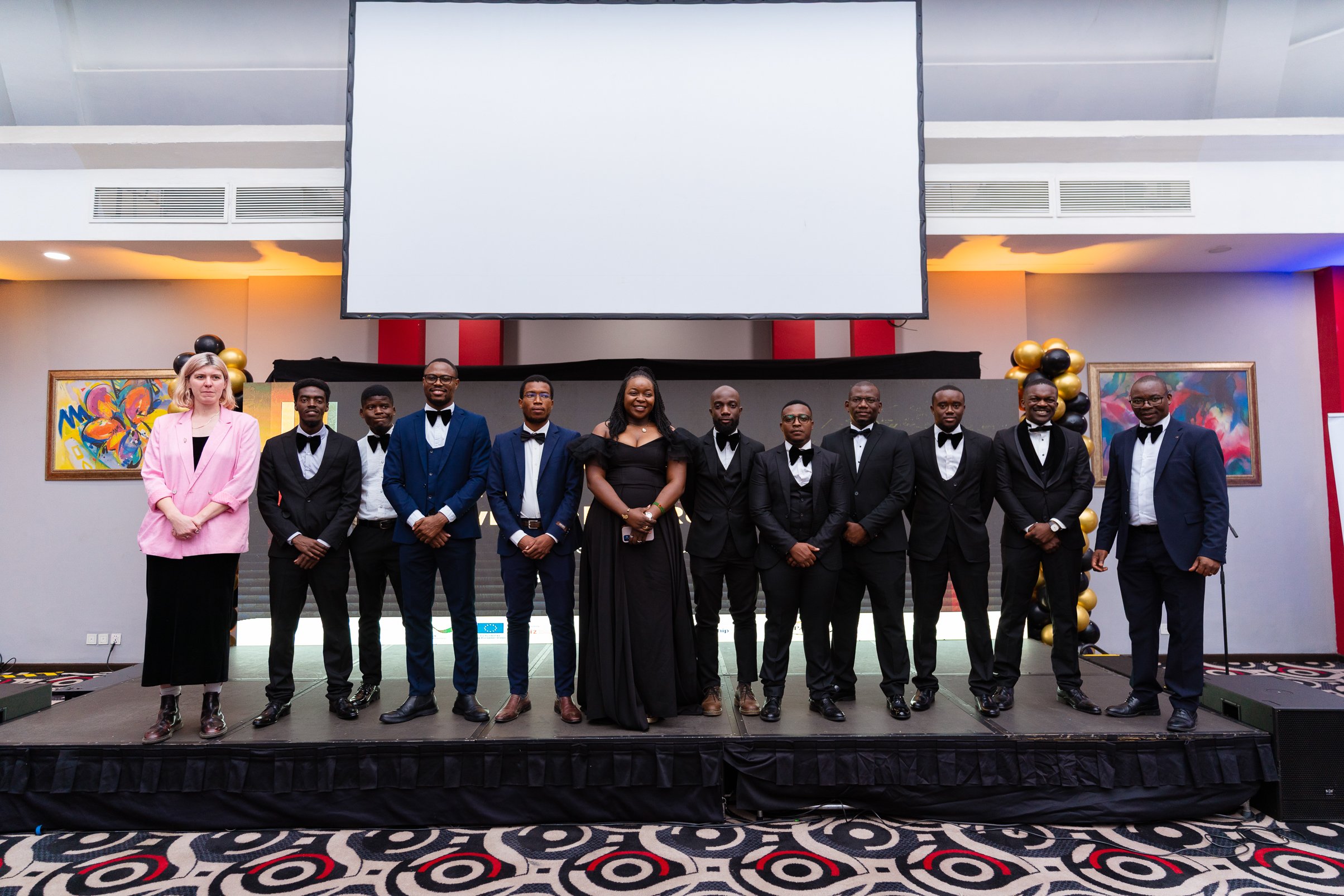
We have recently partnered with Zambia’s Patents and Company Registration Agency (PACRA) and the German Agency for International Cooperation (GIZ) in Zambia to overhaul how PACRA collects data on the real owners of corporate entities.
At Open Ownership (OO), we are committed to supporting Zambia to take an agile, locally driven, and government-led approach to beneficial ownership (BO) reforms. This means building capacity within government – ensuring staff have the skills and technical knowledge to drive forward reforms that boost transparency, fight corruption, and curb tax evasion.
Our approach stands in stark contrast to the outsourcing of key public sector digital transformation reforms, which can often deliver poor value for money, fail to meet local needs, and leave the government without control over critical national infrastructure.
Just recently, an anti-corruption probe was launched into Romania’s Business Registry regarding its outsourced IT contracts. The platform was launched without proper testing and incomplete security and functionality checks, according to the Organized Crime and Corruption Reporting Project, which resulted in more than 130,000 business registrations being blocked and ultimately leaving a financial hole of USD 2.7 million.
By building the system in house, PACRA will be able to maintain full control over its development. This will give PACRA the ability to iterate over time based on the needs of its staff, customers, and other stakeholders.
Critically, we know this kind of approach – adaptable and public-sector led – works. For example, new approaches to health reforms in Tanzania, which move beyond traditional partnerships to genuine country ownership of solutions, are carving a new path towards ensuring sustainability in innovation.
In Zambia, we have hired seven developers, including two on secondment from PACRA, and a product manager, for the next year. Their challenge is to create the foundations of a system that will serve PACRA well into the future by developing a fully customisable form builder and case management system, enabling even non-technical staff to design new workflows and eventually digitise over one hundred services it offers to Zambian businesses.
In this first blog post on the project, we will explain why we are taking this approach in Zambia, how we got here, and what to expect from the project in the coming months.
Background
We have worked with PACRA on several aspects of BO reform for a number of years. This has included advising on recently adopted amendments to the Companies Act, which contain many improvements to BO disclosure requirements.
PACRA has ambitious plans to build a world-class BO register. BO data is a key resource for law enforcement. Greater transparency helps stop corruption, tax evasion, and the misuse of shell companies – issues that cost economies billions each year.
IT leadership at the agency, however, has long been clear that their current infrastructure cannot meet the requirements of new legislation. Unless addressed, this will continue to hamper not just future improvements to its beneficial ownership transparency (BOT) regime but also its ability to serve Zambia’s wider business community.
Since 2024, we have been supporting PACRA to prepare for changes to company law, which would create new obligations for the agency and necessitate system changes. In early 2025, we embarked on a 10-week discovery exercise to better understand issues with PACRA’s current IT infrastructure and architecture. The work was delivered by Lusaka-based ProWeb and funded by the United Kingdom’s Foreign, Commonwealth and Development Office. It involved interviews with PACRA leadership, technical teams, and front-line staff, as well as with end users – the businesses needing to interact with PACRA’s services and those who use the data it generates.
This work revealed that PACRA’s client-facing digital services are fairly well liked and used, but that there were also significant issues with the back-end systems. These issues created challenges for PACRA staff, undermined trust in its data, and did not allow for the agency to evolve with the rapidly changing legislative environment and demands of its customer base.
GIZ Zambia attended the final presentations of our discovery exercise and immediately expressed interest in funding PACRA’s systems overhaul. They recognised both the significant improvement this would make to Zambia’s business environment and the information available to those responsible for raising tax revenues as well as combating financial crime in the country.
Since the end of the discovery exercise, PACRA and the OO team have worked closely with GIZ Zambia to determine how the first year of the project could be funded, and to identify the most efficient way to deliver it. PACRA’s stance has been clear from the beginning of this exercise: it wants full control over its internal systems, and it wants any new system built in-house, in partnership with existing technical staff. This is exactly the right kind of approach to take to ensure the system’s future sustainability.
To do this as quickly and efficiently as possible, it was decided that OO should act as the grant recipient and staff the project with both new hires and secondees from the existing PACRA team. The goal is to build a team that can stay within PACRA, sustain this work over the long term, and ensure that the project’s knowledge is generated by and for the agency, rather than built outside and “transferred” back in. This is a model that will protect the Zambian taxpayer from long-term, expensive dependencies with external vendors, as is too often the case.
What we want to achieve
In this first year, we want to support PACRA to build this system and digitise some core services, such as name clearance, registration, and company incorporation (including BO declaration). We also want the new system to allow businesses to update information about their related persons and make some improvements to the way data is shared with end users via its API.
However, this will only be the initial foundation for the work needed. Together with PACRA, we need to find further funding for the second and third years of the project to enable us to: digitise further services; make improvements to the customer-facing elements of the system; implement effective verification mechanisms to ensure the trustworthiness of PACRA’s data; upgrade the ICT infrastructure on which this technology is built; and migrate all of PACRA’s legacy data to the new system. Only then will the new system’s potential to tackle illicit finance be fully realised.
During our project launch week in January 2026, we met with PACRA to discuss the metrics we would like to improve through this digital reform work. These included:
- increasing the number of cases that PACRA staff are able to handle per day;
- removing the need to make manual changes to the databases;
- removing the need for citizens to go to PACRA offices by digitising all services PACRA offers;
- speeding up the process of getting names cleared, businesses incorporated, and BO declared; and
- improving compliance with BO disclosure.
We won’t be able to address all of these metrics within the first year, especially given our initial focus on internal systems, but they will provide a useful roadmap to keep our work on track as well as a baseline against which to measure our future progress.
Why is Open Ownership involved?
This is a completely new type of project for us at OO. With that, it carries much greater pressure to deliver, along with a much bigger opportunity to learn. As an organisation, we hope to improve Zambia’s BO register while also discovering:
- How can a country leverage existing information, such as shareholding data, to help businesses identify their beneficial owners?
- How useful are the existing resources we have created, for example on usable data features or data standards, to implementing teams on the ground?
- How much does it really cost to build a high-quality BO register?
- How can a corporate registry balance the desire to make information easily accessible to those who need it with a sustainable business model to support its operations?
Fundamentally, we want to speak with credibility and confidence about the challenges and opportunities that effective BOT creates. We will do our best to document these challenges and lessons openly and loudly for all to hear.
Our developing partnership with PACRA is deeply valued by our organisation, and we are grateful to all the individuals there who have made it happen, as well as to our forward-thinking and ambitious funders at GIZ.