Why does ownership transparency matter for integrity in extractive licensing?
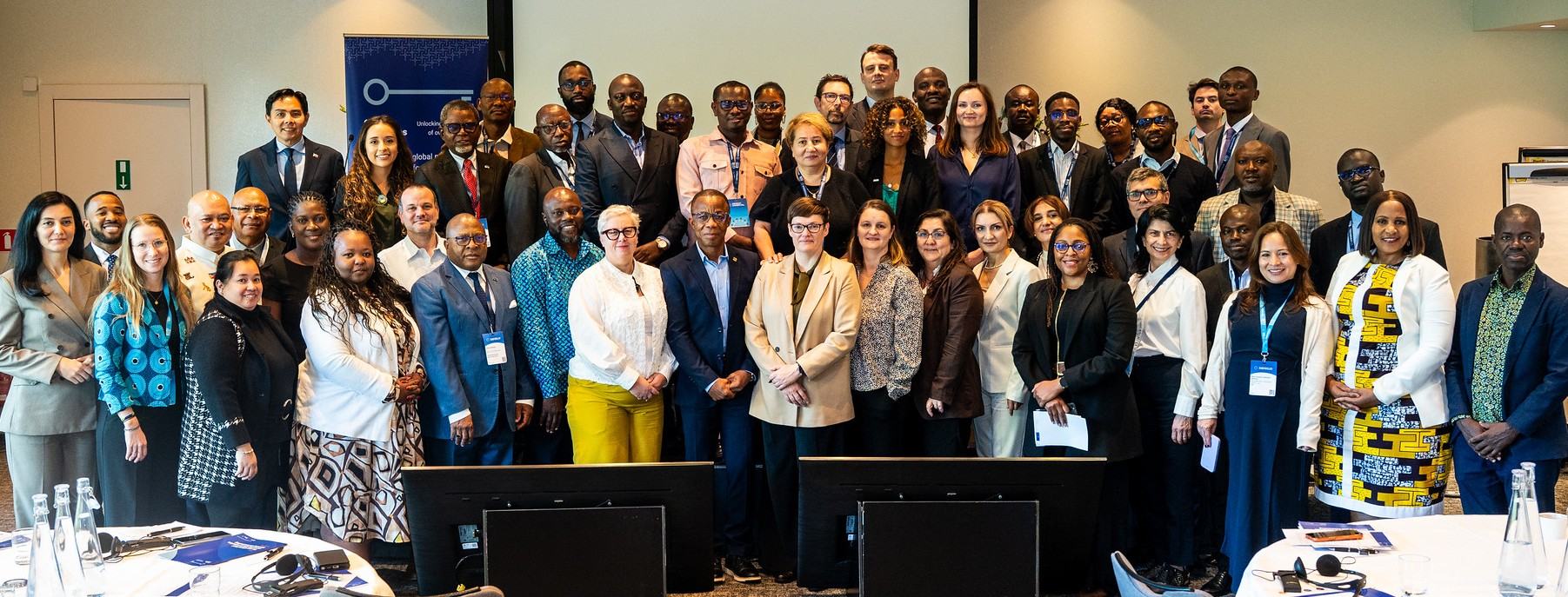
A new Opening Extractives manual offers practical guidance to help governments identify risks, strengthen licensing and advance national priorities.
As global competition for resources intensifies and demand for transition minerals increases, governments face a critical question: how can they award extractive rights in ways that serve the public interest?
Many countries rely on their natural resources as means for mobilising government revenue, creating opportunities for local businesses and generating jobs, including for women. But weak governance means this potential is often not realised. Knowing who ultimately owns and controls companies operating in the extractive sector is critical to meeting this challenge.
Opaque ownership structures can conceal conflicts of interest, links between seemingly unconnected companies, and non-compliance with key regulations, making it harder for licensing authorities to assess the risks associated with an applicant's company. Collecting detailed and accurate beneficial ownership information, as required by the EITI Standard, is only the first step; its value lies in how licensing authorities use this information to inform their decisions about the award of extractive licenses.
Collecting detailed and accurate beneficial ownership information… is only the first step; its value lies in how licensing authorities use this information.
A new manual, co-developed by the EITI and Open Ownership under the Opening Extractives programme, supported by the BHP Foundation and launched at the 2026 EITI Global Conference, provides practical guidance to help governments and regulators turn ownership transparency into stronger oversight by integrating ownership data into extractive licensing and contracting decisions.
Why knowing who owns mining, oil and gas companies matters
A beneficial owner is the person who ultimately owns or controls a company. For licensing authorities, this information can help reveal hidden relationships between applicants, public officials and others involved in decisions about extractive rights. It can also help to identify whether separate applicant companies are connected via shared owners, and whether applicants meet eligibility criteria that help countries meet key objectives, such as local content policies.
Making these checks a routine part of licensing processes may also deter applicants seeking to conceal their interests.
Potential red flags such as political connections or shared ownership across companies are not, in themselves, proof of wrongdoing, but they can signal the need for further scrutiny. The manual guides regulators through such questions, using a risk-based approach to inform which cases warrant closer attention. Making these checks a routine part of licensing processes may also deter applicants seeking to conceal their interests.
The experience in Armenia shows how to do this in practice. With support from the Opening Extractives programme, the government has introduced improvements to the public beneficial ownership register, which covered more than 120,000 legal entities by 2023, increasing access to ownership information and strengthening public oversight. The programme has also engaged licensing and company registry authorities to promote the use of beneficial ownership data in licensing decisions and strengthen accountability in the extractive sector.
Make ownership checks part of licensing decisions
Effective due diligence does not require adopting an entirely new licensing system. The manual shows how authorities can integrate ownership checks into existing application reviews and contracting procedures by screening the information provided, prioritising higher-risk cases and identifying details that need further scrutiny.
Effective due diligence does not require adopting an entirely new licensing system.
The same approach can inform monitoring, renewals and transfers of extractive rights. In Ghana, work with the Petroleum Commission has explored how beneficial ownership information could be integrated into petroleum licensing procedures, helping inform the manual’s practical, risk-based guidance. Opening Extractives has also engaged government institutions in the Philippines on ownership transparency. The programme supported a data sharing agreement between the Philippine Extractive Industries Transparency Initiative and the Securities and Exchange Commission of the Philippines, addressing long-standing barriers to accessing beneficial ownership information. The agreement establishes clearer procedures for sharing ownership data between agencies, helping reduce fragmented reporting and enabling regulators to access more consistent information to inform their decisions.
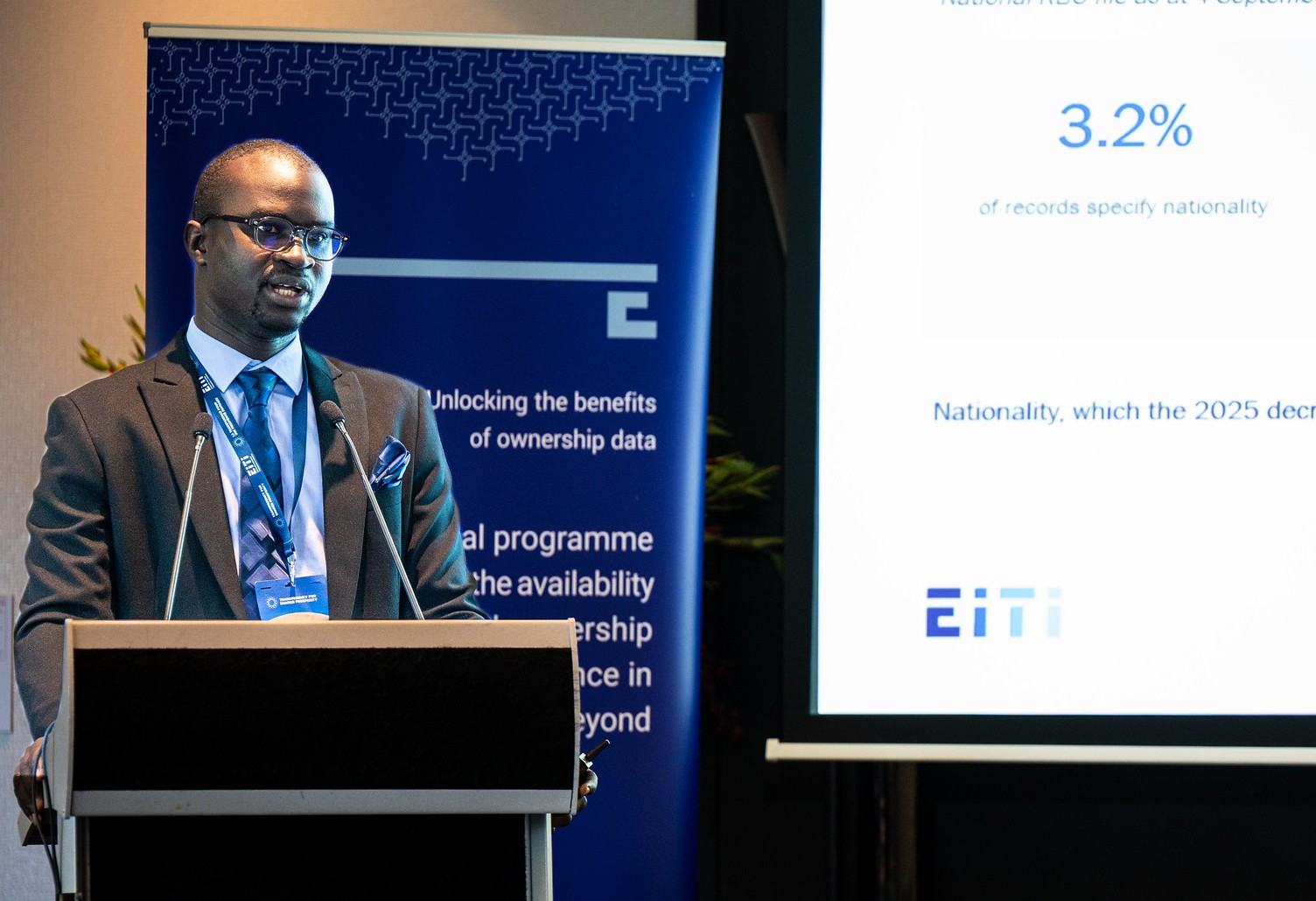
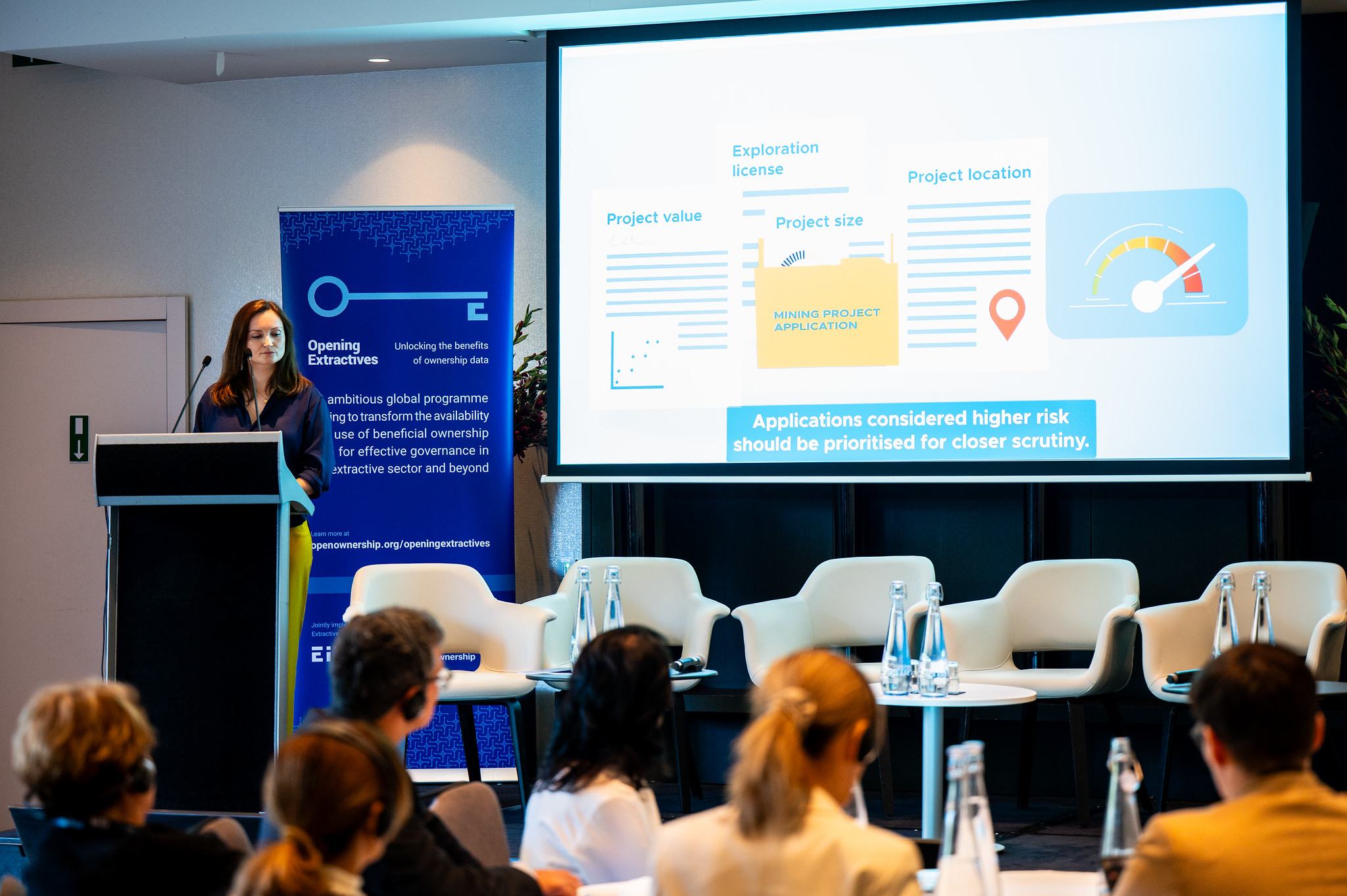
The Opening Extractives team, including Open Ownership's Phoebe Williams, presents the new manual on using beneficial ownership data in extractives licensing and contracting processes.
Advance local content and national priorities
The benefits of ownership transparency extend beyond managing corruption risks. In Ghana and Zambia, beneficial ownership data, combined with other evidence, has helped authorities assess whether companies meet applicable eligibility criteria under local content policies. This can help ensure that eligible local businesses can benefit from opportunities, rather than companies that present themselves as locally owned but are ultimately owned or controlled by individuals who do not meet the eligibility requirements.
The benefits of ownership transparency extend beyond managing corruption risks.
Ownership information can also reveal connections between apparently separate applicants, supporting scrutiny of fair competition. For governments and investors, a clearer view of ownership can support more informed, responsible investment decisions. Where applicable, checks can strengthen due diligence on companies involved in extractive contracts linked to government-to-government arrangements.
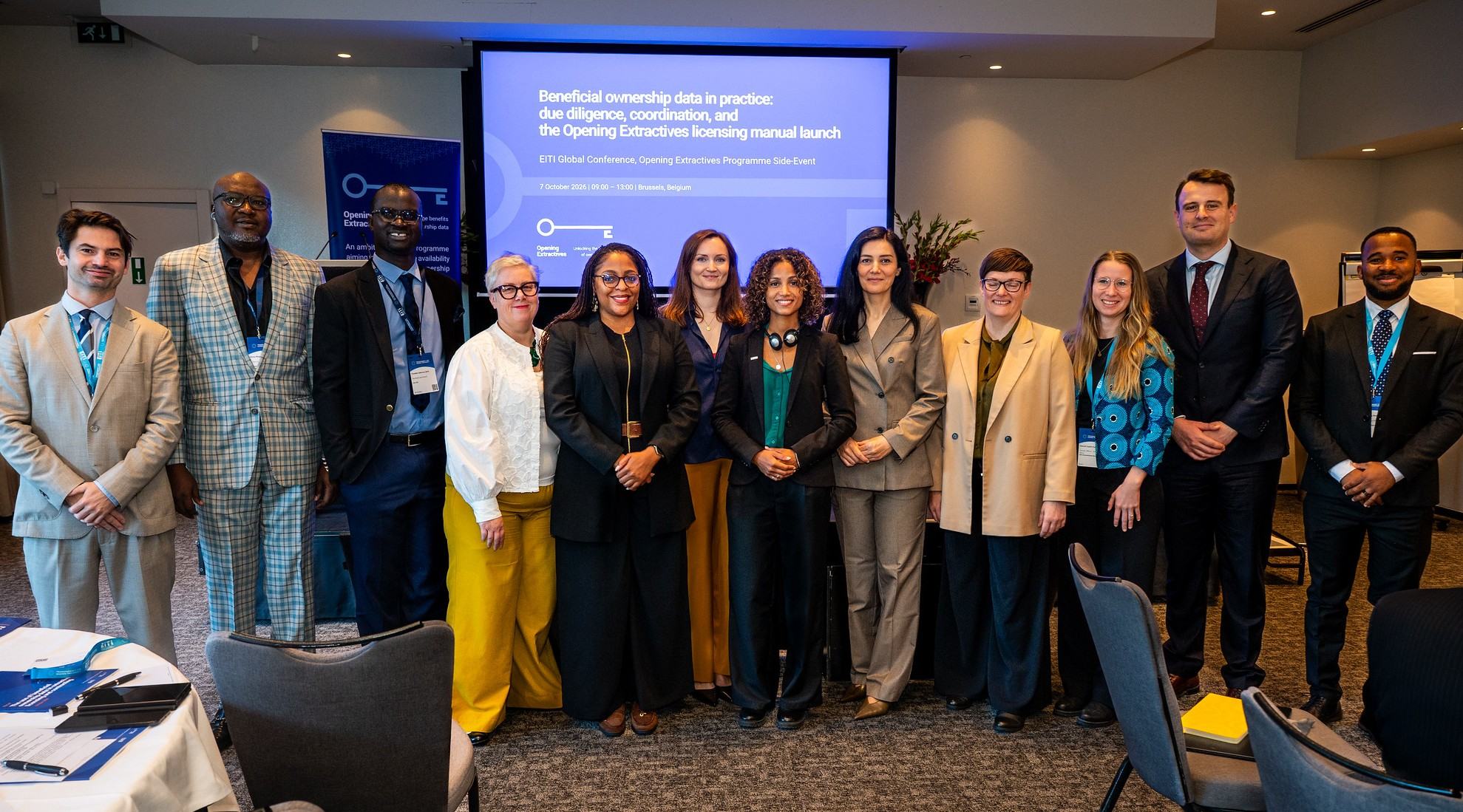
The Opening Extractives team at the 2026 EITI Global Conference.
Turn guidance into practice
For regulators, the manual offers an accessible starting point. Authorities can map the information they already collect, identify where ownership checks fit into licensing decisions and agree how relevant agencies can access, share, verify and use data in line with national law. They can also establish clear criteria for referring higher-risk cases for further review and support staff to apply them consistently. Countries can adapt the guidance to their own laws, licensing procedures and development priorities.
By moving from disclosure to use, governments can make beneficial ownership transparency a practical tool for stronger oversight and more responsible management of natural resources.
By moving from disclosure to use, governments can make beneficial ownership transparency a practical tool for stronger oversight.
Using beneficial ownership data in extractive licensing and contracting
This comprehensive guide outlines steps on using beneficial ownership data in licensing and contracting processes in the extractive sector
Related articles and publications

Publication type
Blog post
Topics
Opening Extractives