From reform to results: Introducing BEAM, a new programme to measure impact in beneficial ownership transparency
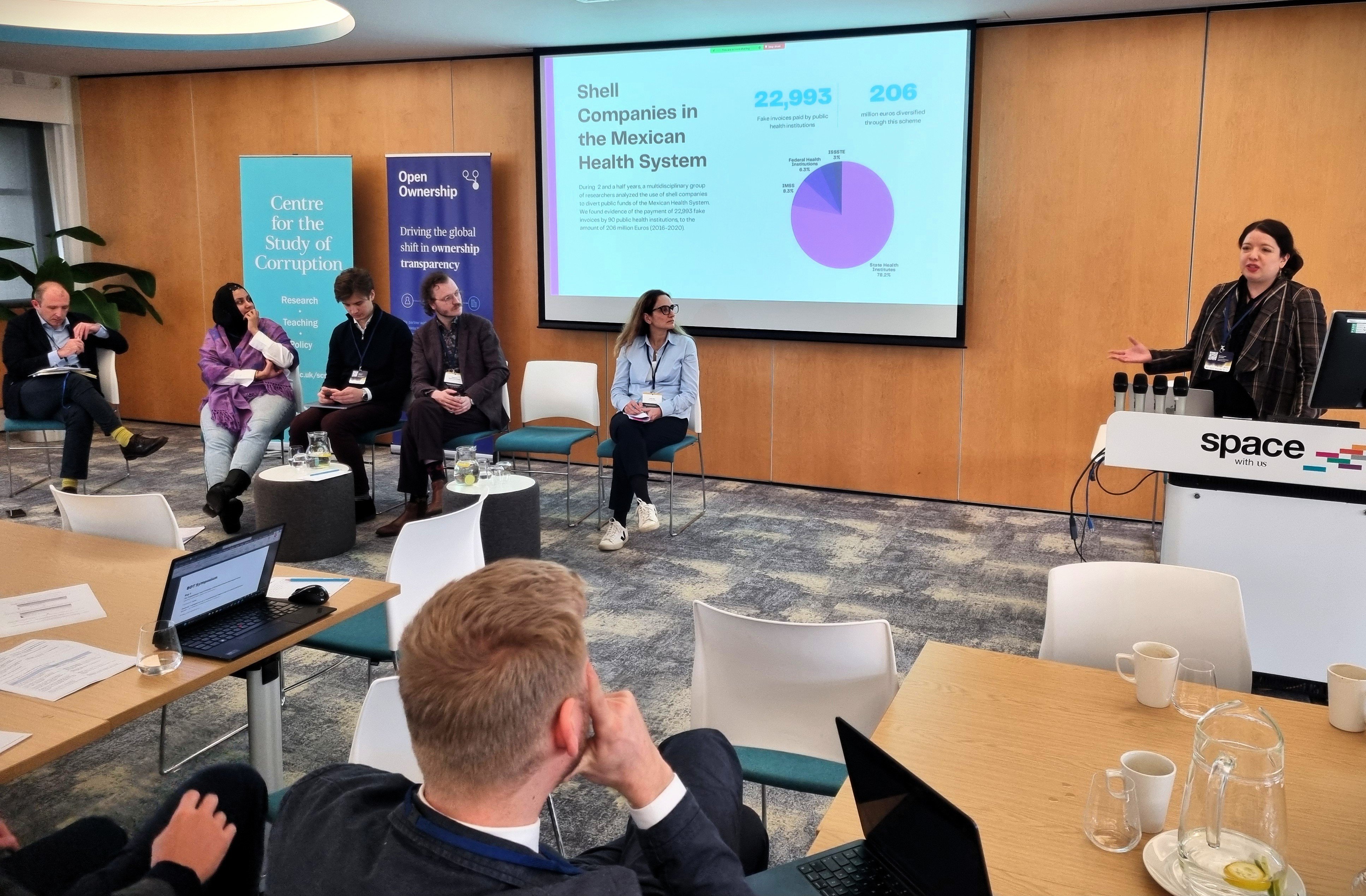
“Reform implementation and legal frameworks” session at the Evidence and Impact of Beneficial Ownership Transparency Research Symposium in February 2026, moderated by Thom Townsend (Open Ownership), with presentations from Irene Tello Arista (Central European University), Leyla Ateş (Kadir Has University), Lyla Latif (Committee on Fiscal Studies, University of Nairobi), Jan Oleksiuk, and Gniewomir Wycichowski-Kuchta (Polish Academy of Sciences).
Over the past decade, beneficial ownership transparency (BOT) has evolved from a relatively niche policy concept into a globally recognised reform agenda. Governments have put resources into creating systems to collect and publish beneficial ownership information, motivated by its potential to tackle money laundering, curb corruption, strengthen tax systems, and enhance both public accountability and the health of the business environment.
However, a significant challenge remains: there is still limited systematic evidence demonstrating the real-world impact of BOT. As countries continue to prioritise investment in these reforms, citizens have the right to know that they are returning genuine social and economic value. Impact measurement is therefore not an academic exercise, it is an essential accountability mechanism.
Impact measurement is not an academic exercise, it is an essential accountability mechanism.
To respond to this challenge, Open Ownership has launched the Beneficial Ownership Transparency Evidence and Measurement (BEAM) Programme: an initiative to expand the evidence base for BOT’s impact through collaboration, resources, and country programming. Our aim is to advance the development of robust, credible, and replicable approaches to understanding and demonstrating the impact of BOT reforms. We are doing this by identifying and prioritising areas where impact measurement can be most meaningful, and creating opportunities for a broader ecosystem of partners to convene and collaborate.
BEAM is one of the core pillars of our work under Open Ownership’s 2030 strategy, targeting our objective of ensuring stakeholders generate and use stronger evidence and impact measurements to promote accountability and shape the future of the BOT space. Through this work, we hope to broaden the collective understanding of what makes reforms effective, and demonstrate that BOT is a legitimate and sustainable policy solution to a range of transparency and accountability issues.
Why impact measurement is essential
To date, the case for BOT has largely been articulated in normative terms. Yet in an increasingly complex and politicised policy environment – where reforms can impose both costs and benefits – normative arguments alone are insufficient. Policymakers, oversight bodies, and the public require clear evidence of effectiveness and impact.
A recent lower court ruling in Texas, USA underscores this point. In it, the judges struck down the extension of anti-money laundering requirements to real estate agents, highlighting that the federal regulator, FinCEN, had not shown how relevant real estate transactions were categorically suspicious. More broadly, reforms that are not supported by rigorous analysis may struggle to retain legitimacy and durability.
Better evidence is needed to understand what is and is not working as jurisdictions implement reforms, to help agencies adjust their approaches accordingly and improve the likelihood that impact will be achieved. We see this type of inquiry supporting two of our other strategic objectives. First, to advance user-centred reforms that result in the active use of beneficial ownership information by stakeholders, especially in government agencies such as procurement and tax authorities. Second, to improve access to timely and reliable domestic and international beneficial ownership information for all relevant actors, which requires ongoing improvements in reform fundamentals such as the structuring and verification of information.
The UK provides a good example of a jurisdiction that is generating robust evidence on the value of BOT. A recent study by the Department of Budget and Trade estimated the value of beneficial ownership information in the Companies House register to the private sector alone was about GBP 4,400 per organisation per year. The UK has also taken an iterative approach, for instance, improving their verification protocols following evidence of poor data quality in the register.
However, in most cases, BOT reforms have been implemented without a corresponding investment in understanding their outcomes. This approach presents risks to long-term sustainability. Establishing credible evidence of impact is therefore essential – not only to justify existing reforms, but also to inform future policy design and ensure democratic accountability.
Fortunately, there is growing recognition of the importance of this type of research, and an evidence base is beginning to emerge. In February 2026, Open Ownership, the World Bank Group’s Beneficial Ownership Transparency Working Group, and the Centre for the Study of Corruption at the University of Sussex hosted a Research Symposium entitled “Evidence and Impact of Beneficial Ownership Transparency”. The first event of its kind, the Symposium showcased 27 published and in-progress research projects demonstrating positive outcomes from BOT reforms and beneficial ownership data use. The research reflected the increasing use of this data beyond the traditional focus of financial crime, with new uses and approaches to impact measurement emerging in contexts such as procurement, taxation, and broader corporate and democratic accountability. A full report can be found here.
A targeted and strategic focus
BEAM is designed to address the evidence gap through a targeted approach to evaluation and measurement. Its initial focus has been on public procurement, a sector that represents between 13% and 20% of global GDP, and which is particularly exposed to fraud and corruption risks, to the detriment of citizens. This has led international standards like the Financial Action Task Force and the United Nations Convention against Corruption to prioritise access to beneficial ownership information for authorities in the course of procurement.
In the future, the programme will also consider other areas relevant to public financial management, such as tax, fisheries governance, and oil and gas licensing. BEAM seeks to develop practical, context-sensitive methodologies to assess how BOT adds value through the use of beneficial ownership information by government agencies and others. Our first published resource in this area, Measuring the impact of beneficial ownership transparency in public procurement: Starter guide, takes this approach.
Central to this is the recognition that implementation and research are mutually reinforcing. Effective implementation generates data and insights, while rigorous research informs and improves implementation and data use practices. Strengthening this relationship is fundamental to achieving sustainable reform outcomes.
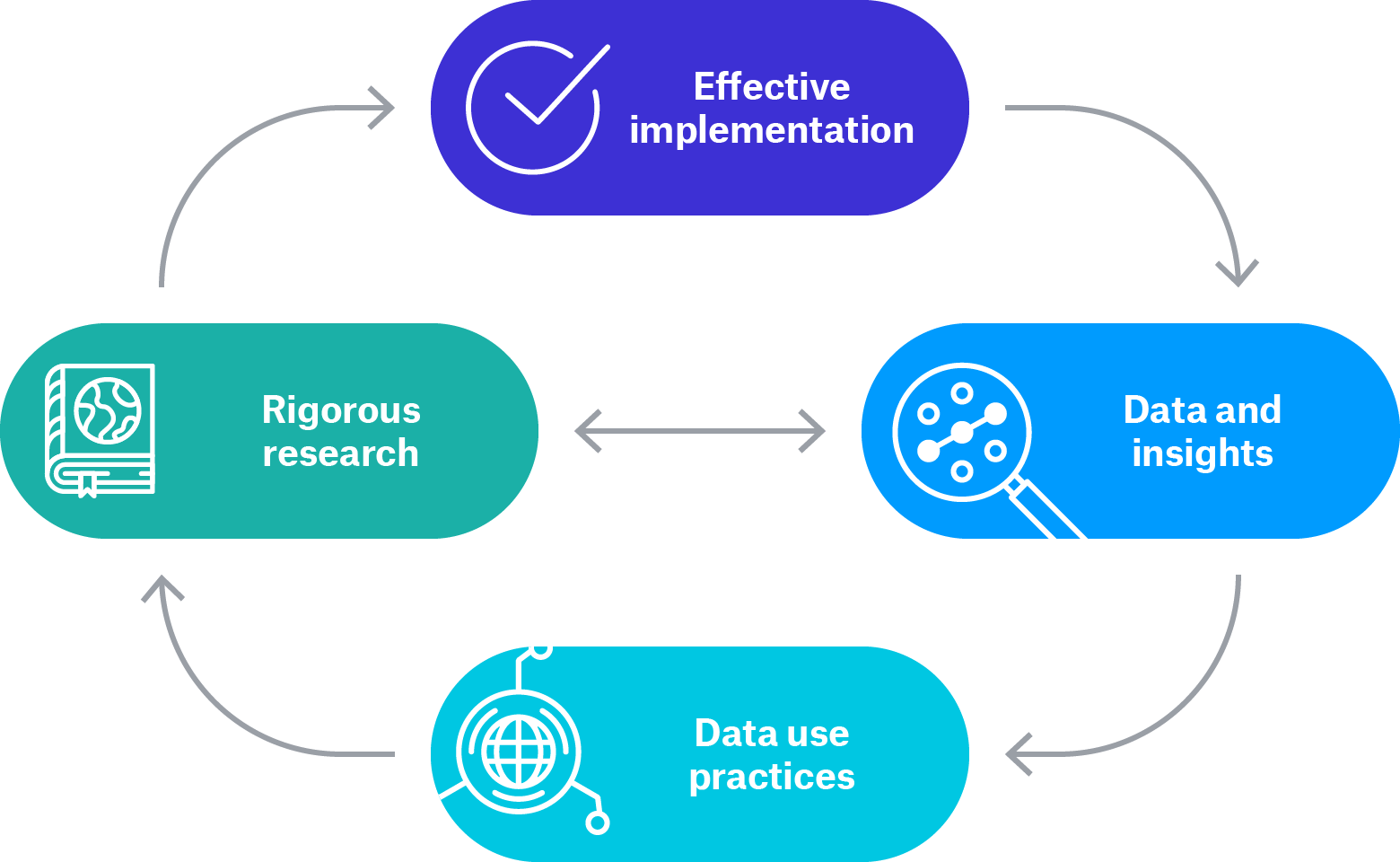
This diagram provides a simplified illustration of the interaction between research, implementation, data use practices, and data insights.
Programme priorities and collaboration
The BEAM programme is structured around three complementary workstreams:
- First, it will develop global resources and impact stories, including methodological guidance, analytical tools, and research outputs that demonstrate the value and impact of BOT, and support impact measurement across different contexts.
- Second, it will support the uptake of impact measurement by engaging with international partners; contributing to global measurement and monitoring frameworks; and encouraging other actors to adopt and apply evidence-based approaches.
- Third, it will work directly with government partners to co-create and pilot impact measurement frameworks in country. This includes identifying priority challenges, developing tailored indicators, and embedding measurement processes within institutions.
This approach is deliberately collaborative and iterative, ensuring that methodologies are grounded in real-world application and adapted to specific country contexts. BEAM is a partnership-driven initiative. Open Ownership is already collaborating with world-class research organisations such as the International Tax Observatory, and government partners like the Department of Education in the Philippines.
By advancing systematic approaches to measuring the impact of BOT, Open Ownership seeks to strengthen both the evidence and the legitimacy of reform efforts. This marks an important transition in the evolution of the BOT agenda, from implementation alone to a more comprehensive focus on outcomes, impact, and long-term sustainability. By 2030, we envision a broad evidence base and thriving community of interest carrying on this essential research.