From technical compliance to continental impact: How beneficial ownership transparency is transforming governance in Africa
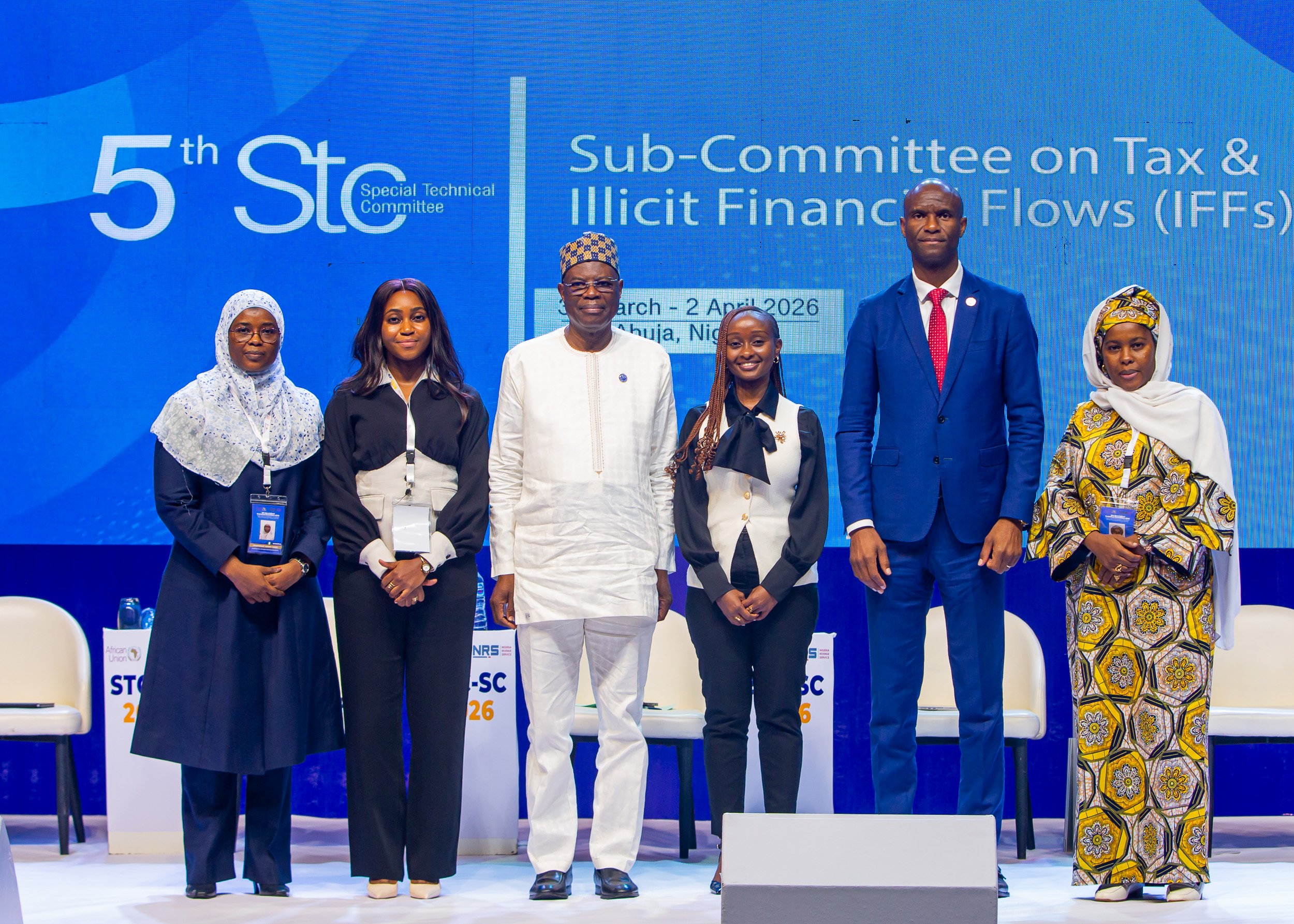
Panelists at the OO session on BO data and regional data-sharing to strengthen tax governance and domestic resource mobilisation in Africa, at the Fifth Session of the Sub-Committee on Tax and IFFs.
This is a joint blog post by Open Ownership and the African Union Commission.
The $88.6 billion the African continent loses annually to illicit financial flows (IFFs)[1] could too easily become yet another number, removed from what it actually implies for millions of lives: hospitals that aren’t built and roads that aren’t fixed, a reality too familiar across the continent. Behind those gaps lie concrete mechanisms: a mining licence awarded to a shell company, a government contract won by a firm owned by the very official who approved it, or a tax liability quietly avoided through companies whose real owners remain hidden. This is what opacity costs.
Knowing the natural person that ultimately owns, controls, or benefits from companies and trusts (their beneficial owners) is a powerful policy reform in the fight against IFFs. Strengthening beneficial ownership transparency (BOT) enables governments to close tax loopholes, recover illicit assets, and direct revenues towards public services. Transparent ownership frameworks signal to investors that a country’s business environment is accountable and trustworthy, fostering the confidence needed to attract and sustain investors.
Fortunately, BOT reform is no longer a niche technical reform in Africa. It has become a continental priority, with close to 20 African countries having enacted or significantly strengthened beneficial ownership (BO) legislation – and momentum continues to grow.
But no single institution or government can carry this agenda alone. Moving from technical compliance to effective reforms requires political leadership, expertise, and sustained engagement; and the African Union Commission (AUC) and Open Ownership are working with implementing agencies and regional partners to move BOT from policy commitment to practical reality.
Regional leadership: driving the beneficial ownership transparency agenda
Open Ownership and the AUC are driving this agenda in Africa. The AUC’s Economic Trade, Tourism, Industry and Minerals Department has supported this momentum by creating dedicated spaces for BOT deliberations, through the first-of-its-kind BOT seminar convened on the sidelines of the African Union’s Sub-Committee on Tax and Illicit Financial Flows in Lusaka, Zambia in May 2025.[2]
This year, the AUC, in partnership with the Africa Beneficial Ownership Transparency Network (AfBOT Network), hosted a Fridays of the Commission webinar on BO reform, which was followed by a BOT session at the Fifth Sub-Committee on Tax and Illicit Financial Flows. There, three core BOT recommendations were adopted, which set concrete steps forward to support economic governance in the continent:
- an urge for Member States to use high-quality BO information to support anti-IFFs efforts, strengthen domestic resource mobilisation, and promote investment and economic growth;
- a call on Member States to establish BO registers that are interoperable with each other and domestic databases, and designed to support cross-border data sharing;
- an urge for the AU Commission, the African Tax Administration Forum, and Tax Justice Network Africa, through the AfBOT Network to support Member States in capacity-building and technical support on BOT.
Opportunities for intercontinental BOT learning and exchange
While there has been notable progress over the past decade, countries continue to face challenges in implementing BOT reforms, including a lack of robust legal framework, technological infrastructure, and interagency coordination, with dwindling budgets. These challenges, however, create opportunities for the continent to learn from itself and from the emerging best practices rooted in the contextual realities of the continent. Some examples include:
- On access regimes, Botswana, Nigeria, and Senegal’s extractives registers demonstrate what it takes to maintain fully public registers, whereas Zambia is leading the path on legitimate interest access.
- On domestic interoperability, Rwanda shows how corporate registries can integrate seamlessly with tax systems. Meanwhile, Kenya is making progress in enabling the sharing of BO data with its public procurement regulatory authority.
- On sustainability, Zambia is showcasing what's possible when a dedicated in-house team of developers takes ownership of the design and build of their next-generation business and BO register, applying a user-centred approach in line with international good practice.
- On cross-border data-sharing, Botswana, Namibia, and South Africa are taking early, valuable steps through the Southern African Regional Data Sharing Initiative (SARDSI) in exploring how regional exchange on BO information can look in practice.
- On trust and legal arrangements, Mauritius and Namibia are among the countries where work is underway to extend BO requirements beyond companies to include trusts and other legal arrangements, a critical step towards more comprehensive coverage that closes the loopholes left open by corporate-only regimes.
The next step: use the data
Africa’s next leap in transparency won’t come from building new registers alone. To reap the benefits of these implementation efforts, Member States must ensure that key government agencies are systematically using BO data that is adequate, accurate, and up-to-date. It is not enough for them to pursue these reforms simply to align with global standards. They must think creatively about how this data can be used in practice by key government agencies to deliver public services, and protect public resources, and how it ensures that those who benefit from public resources do so rightfully.
Member countries should ask: What is our overarching policy goal? This must serve as the foundation for all aspects of implementation, including the access regimes they choose, the verification measures they put in place, the usability of the data, and its interoperability across government systems.
Using beneficial ownership data to close Africa's tax gap
The practical application of BOT is critical to tax administration as it helps assess the tax base by uncovering hidden assets, understanding income streams, and mapping ownership networks. By shedding light on the distribution of wealth and assets, BO data improves tax compliance and collection, and provides authorities with critical insights into the potential tax base of an economy.
The scale of the problem underscores the urgency. The continent loses an estimated USD 18.5 billion annually in tax revenue on wealth held offshore, with an estimated 44% of Africa’s financial wealth hidden in offshore accounts. IFFs linked to tax abuse, including trade misinvoicing and profit-shifting, drain between USD 30 billion and USD 52 billion from government revenues each year, with resource-rich economies bearing a disproportionate burden.
Criminal actors are sophisticated, and their schemes do not stop at borders, they move assets, layer ownership structures, and exploit jurisdictional gaps with increasing creativity. Africa cannot respond to cross-border challenges through national responses only. Member countries must therefore invest in the infrastructure, agreements, and political will needed to enable competent authorities to easily share BO information and trace ownership structures across jurisdictions.
Sustaining momentum
Sustainability remains a key priority. Countries continue to grapple with how to finance reforms, ensure that enabling legal and technological frameworks are in place, and build the institutional capacity needed to collect and maintain quality data.
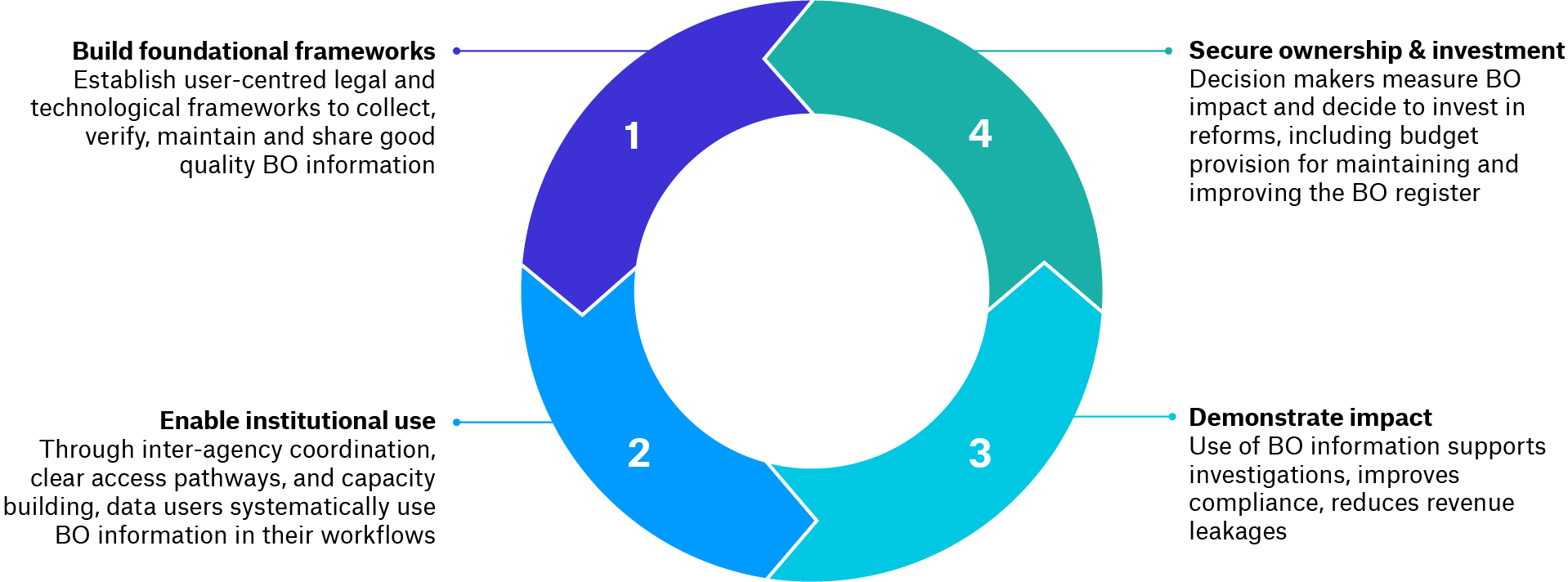
In this sense, sustainability is not just a financing question; it is a governance one. Countries that clearly define their policy goals, demonstrate early wins, and embed BO data into core government functions are best positioned to make these reforms self-reinforcing.
Where next for the partnership?
Africa is well-positioned to demonstrate strong leadership and innovation in BOT reforms. The AU, in partnership with OO and working together with Member States and regional organisations, remains committed to advancing this agenda, creating spaces for meaningful deliberation, and facilitating the systematic use of BO data by governments to deliver tangible results across the continent.
This month, at the joint African Union Session of the STC themed "Financing Africa's Industrialisation for Sustainable Development", Open Ownership, via the AfBOT Network, is holding a side event entitled Who Really Owns Africa's Resources? that aims to share emerging good practices from natural resource and strategic minerals sectors. Read more.
Endnotes
[1] UNCTAD, Economic Development in Africa Report: Tackling Illicit Financial Flows for Sustainable Development in Africa (2020), https://unctad.org/system/files/official-document/aldcafrica2020_en.pdf.
[2] African Union Commission, Beneficial Ownership Transparency Seminar Report, Lusaka, Zambia (May 2025).
Publication type
Blog post
Country focus
Rwanda,
Nigeria,
Republic of South Africa,
Senegal,
Botswana,
Zambia,
Mauritius,
Kenya
Sections
Impact,
Implementation
Open Ownership Principles
Structured data