Beyond the register: Nigeria’s next challenge is turning beneficial ownership data into public value
Ten years ago, beneficial ownership transparency was still a relatively niche reform conversation globally. At the 2016 UK Anti-Corruption Summit in London, Nigeria made a bold political commitment to establish a public beneficial ownership register, at a time when public registers were nascent.
It took another seven years of legislative reform, institutional coordination, technical development, and sustained donor support to turn that commitment into reality. On 25 May 2023, Nigeria launched Africa’s first public beneficial ownership register and set out to collect and publish BO information for its more than 4 million companies. This milestone firmly placed the country at the forefront of the continent’s transparency movement. That crown cannot be taken away.
But three years later, an important question confronts Nigeria:
So what? What happens now that the register is built?
The register was never the finish line. The extent to which beneficial ownership information is actually being used – systematically, routinely, and meaningfully – by the institutions responsible for protecting public resources, safeguarding economic integrity, and combating illicit financial flows is the next frontier of beneficial ownership reform, particularly in this constrained funding landscape.
And what does this mean for the average Nigerian? The answer matters far beyond corporate compliance. A recent Taxing the Rich: Nigerian Fair Tax Monitor Thematic Report found that only 40 of Nigeria’s estimated high-net-worth individuals were identified as compliant taxpayers – a compliance rate of just 0.035%. The report estimates that properly taxing just 4,690 (a fraction of Nigeria’s 130,000 high-net-worth individuals), which could require knowing who owns and controls companies and accompanying assets, could generate over NGN 4.59 trillion (about USD 6 billion) annually. In development terms, this amounts to about 7% of Nigeria’s recently approved national budget and almost double its health budget for 2026. These are hospitals, medication, and medical services that are not reaching the average Nigerian.
Over the past several months, with support from FCDO Nigeria, Open Ownership has worked with government stakeholders in Nigeria to consolidate gains made since the register’s launch, identify implementation gaps, and explore what “next-level” beneficial ownership reform would look like once the core legal and technical infrastructure is in place. Our recently published report, Enhancing beneficial ownership data collection and use in Nigeria, captures both the significant progress made and the emerging implementation questions now facing the country.
One finding stands out clearly:
“The system’s effectiveness will increasingly depend not on additional collection alone, but on stronger coordination, better interoperability, more systematic use, and clearer feedback loops across institutions.”
That observation reflects a broader global shift.
For years, beneficial ownership reforms focused primarily on data collection or regulatory compliance – passing legislation, issuing regulations, determining what information should be disclosed, and building registers. While these questions remain important, countries are increasingly confronting a deeper reality: collecting information alone does not create impact. It is becoming evident that the future of beneficial ownership transparency will be defined by whether governments can use ownership information to strengthen procurement integrity, improve licensing decisions, support tax enforcement, combat illicit financial flows, trace assets, and identify conflicts of interest.
What will it take?
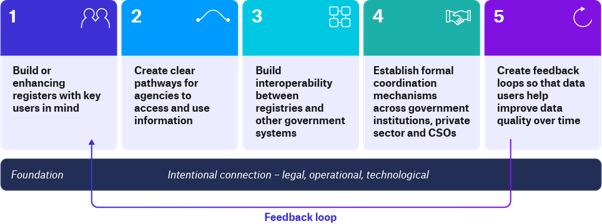
Effective use of beneficial ownership information does not happen automatically simply because data exists or because governments recognise its value. Institutions must be intentionally connected – legally, operationally, and technologically – which makes interoperability and effective interagency coordination critical.
That means:
- building or enhancing registers with key users in mind, including procurement authorities, tax agencies, financial intelligence units (FIUs), law enforcement, licensing bodies, and other competent authorities;
- creating clear pathways (legal and technological) for agencies to access and use information;
- building interoperability between registries and other government systems;
- establishing formal coordination mechanisms across government institutions, alongside structured and periodic engagement with private sector actors and civil society organisations who play critical roles as providers and users of beneficial ownership data; and
- creating feedback loops so that data users help improve data quality over time.
Five building blocks of effective use
It also requires governments to begin measuring success differently, not simply by how many records have been collected, but by whether beneficial ownership information is actually helping governments meet their policy goals – prevent procurement abuse, strengthen licensing integrity, improve tax compliance, support investigations, and recover assets, among others.
One of the report’s central recommendations was the establishment of “a cross-departmental BO working group with a clear mandate and measurable performance indicators to coordinate reform objectives.” Encouragingly, Nigeria appears increasingly aware of this challenge. The recent inauguration of an interagency coordination working group by the Corporate Affairs Commission is an important signal in this regard.
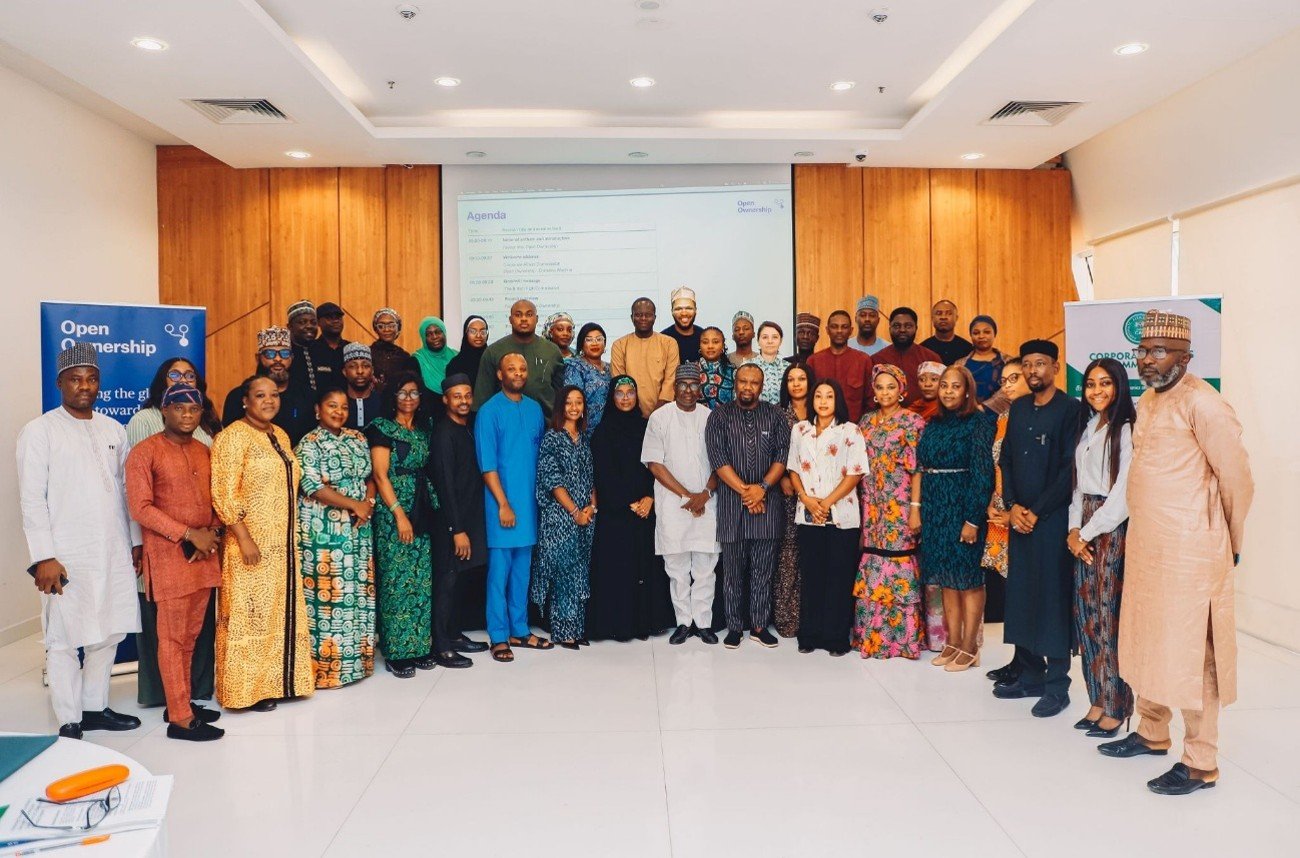
First Stakeholders Workshop to Review and Validate the Enhancing Beneficial Ownership Data Collection and Use in Nigeria, December 2025
Nigeria’s experience also offers an important lesson for countries still legislating or building systems – countries should design for use from the beginning.
That means asking early:
- Which agencies will need the information?
- For what decisions?
- How will data be shared?
- What systems need to speak to each other?
- How will impact be measured?
At Open Ownership, this shift increasingly sits at the centre of our new strategy, which prioritises supporting governments not only in building user-centred registers but also in enabling key government agencies to use them. We also recognise that, particularly where registers are public, private sector actors, civil society, academics, and foreign law enforcement form part of the wider data-use ecosystem that helps translate transparency into accountability.
The African Union has also recognised the growing importance of beneficial ownership information in supporting broader governance objectives. At the April 2026 Subcommittee meeting of the Specialised Technical Committee of the African Union, Member States committed to:
“systematically use high-quality BO information to support anti-IFFs efforts, strengthen domestic resource mobilisation efforts and promote investment and economic growth.”
Why Nigeria?
Nigeria is one of Africa’s most economically significant countries and has established itself as a continental leader within the beneficial ownership space – launching the world’s first public extractive register and Africa’s first free public register, implementing major legal reforms, and strengthening broader anti-money laundering and economic governance frameworks, as marked by its exit from the FATF greylist in October 2025. It has also championed and actively sponsored two resolutions at the Conference of the States Parties to the United Nations Convention Against Corruption to enhance beneficial ownership information for asset recovery.
But the next phase of implementation may prove even more important than the first because ultimately, the success of beneficial ownership reforms will not be measured solely by how many registers exist or how many records are collected. The real measure of success will increasingly be whether governments can use this information to make better decisions. And with the leadership it has demonstrated so far, Nigeria is uniquely positioned to make this a reality.