Philippines: Using beneficial ownership data to strengthen extractive governance, transparency and accountability
Source: Shutterstock.
Key messages
- Opening Extractives helped lay the foundation for more accessible and reliable beneficial ownership data in the Philippines.
- The programme supported a landmark data sharing agreement between PH-EITI and the Securities and Exchange Commission (SEC).
- OE supported legislative and policy reforms, including beneficial ownership disclosure provisions in the Mining Fiscal Regime Bill and revisions to executive orders.
- Training and awareness-raising helped policymakers, businesses and civil society embed beneficial ownership transparency into national reform agendas, including the OGP national plan.
The challenge: Limited access and use of data
The Philippines has been an early implementer of beneficial ownership disclosure reforms. Since 2001, anti-money laundering laws have required companies to disclose their beneficial owners, and since 2019 this information has been submitted to the Securities and Exchange Commission (SEC). However, compliance remained uneven, and beneficial ownership data was treated as confidential.
To improve gaps in public access, Philippines EITI (PH-EITI) began collecting beneficial ownership information from extractive companies in 2018, publishing data voluntarily disclosed through signed waivers. While this marked important progress, the approach relied on company goodwill and was constrained by privacy legislation, which limited public access without a clear legal mandate. As a result, beneficial ownership data existed but was fragmented, incomplete and difficult to access. Civil society organisations, journalists and local communities struggled to obtain and use beneficial ownership information to identify risks such as links to politically exposed persons.
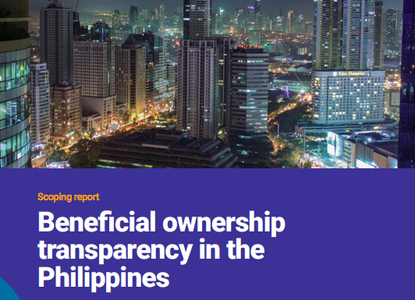
To accelerate reforms, the Philippines joined the Opening Extractives (OE) programme in 2021. A scoping report identified priority legal, policy and institutional gaps, including the need for clearer mandates for disclosure, stronger inter-agency coordination and improved capacity to use beneficial ownership data. Jointly implemented by the EITI and Open Ownership, the programme has since supported targeted reforms to improve data access, embed beneficial ownership transparency in law and policy, and strengthen use of ownership information to advance accountability in the extractive sector.
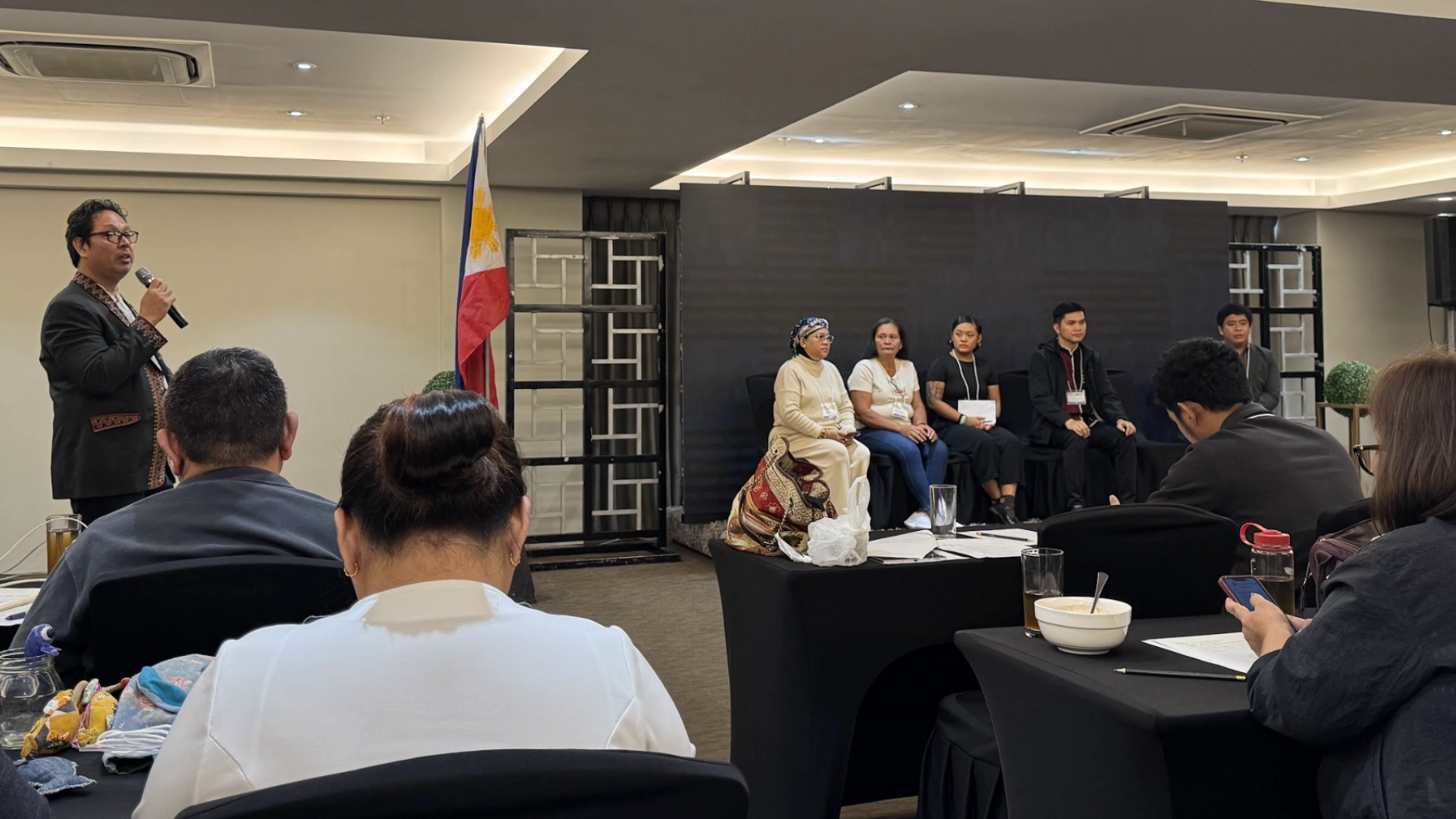
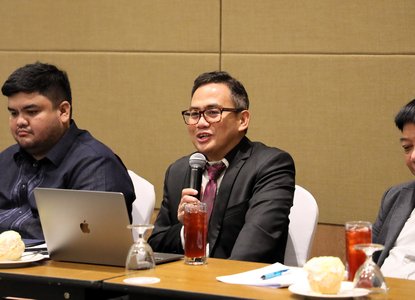
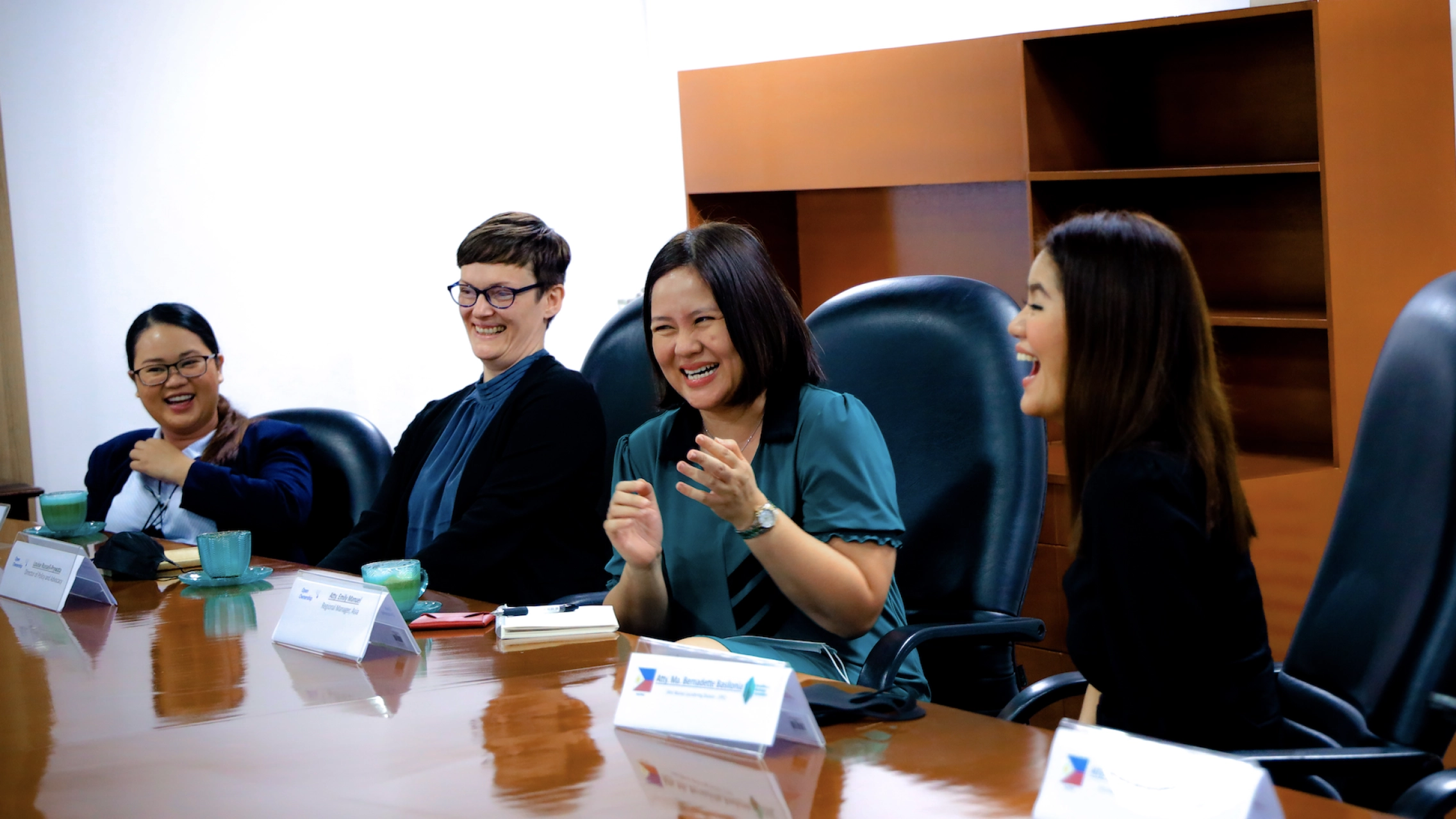
Participants engage in a panel discussion on strengthening extractive governance through beneficial ownership transparency.
Results and impact
1. Embedding beneficial ownership in law and policy
Opening Extractives provided technical input to the Enhanced Fiscal Regime for Large-Scale Metallic Mining Act (Republic Act No. 12253), supporting the inclusion of beneficial ownership among the extractive sector data eligible for public disclosure. Enacted in September 2025, the law marked a major milestone in aligning fiscal policy with transparency and governance objectives.
Key transparency-related provisions include:
- Mandatory disclosure of beneficial ownership, tax and non-tax payments, companies’ SEC filings and natural capital accounting data.
- Multi-stakeholder oversight, embedding participation by government, civil society, and industry into governance processes.
- Legal enforceability, transforming voluntary disclosures made under the EITI framework into binding requirements.
- Opening Extractives supported consultations between the Department of Finance and civil society and provided technical recommendations to align the law with international disclosure and accountability standards.
“Civil society plays a huge role in making extractives data meaningful to the public. Through the Opening Extractives programme, we have seen increased confidence among CSOs and government partners in using beneficial ownership data to support transparency and accountability in the Philippines.” – Beverly F. Besmanos, National Coordinator, Bantay Kita, Inc. - Publish What You Pay Philippines
2. Improved data sharing and inter-agency coordination
OE supported the establishment of a data sharing agreement (DSA) between PH-EITI and the SEC, helping address long-standing barriers to accessing beneficial ownership information for extractive companies.
The agreement:
- Clarifies how corporate and ownership data held by the SEC can be shared for EITI reporting, reducing fragmentation and improving the consistency and reliability of disclosures.
- Strengthens coordination between institutions and supports more efficient public reporting.
- Includes clear privacy safeguards to ensure compliance with data protection rules, while company waivers allow sensitive information to be disclosed where appropriate.
- Aligns national practice with international standards such as FATF Recommendation 24, which requires timely access to accurate beneficial ownership data for legal entities to combat money laundering.
Together, these arrangements strike a balance between transparency and privacy and create a more enabling framework for the public use of ownership data. For civil society, journalists and oversight bodies, improved data sharing will make it easier to identify risks, monitor compliance and hold extractive companies to account.
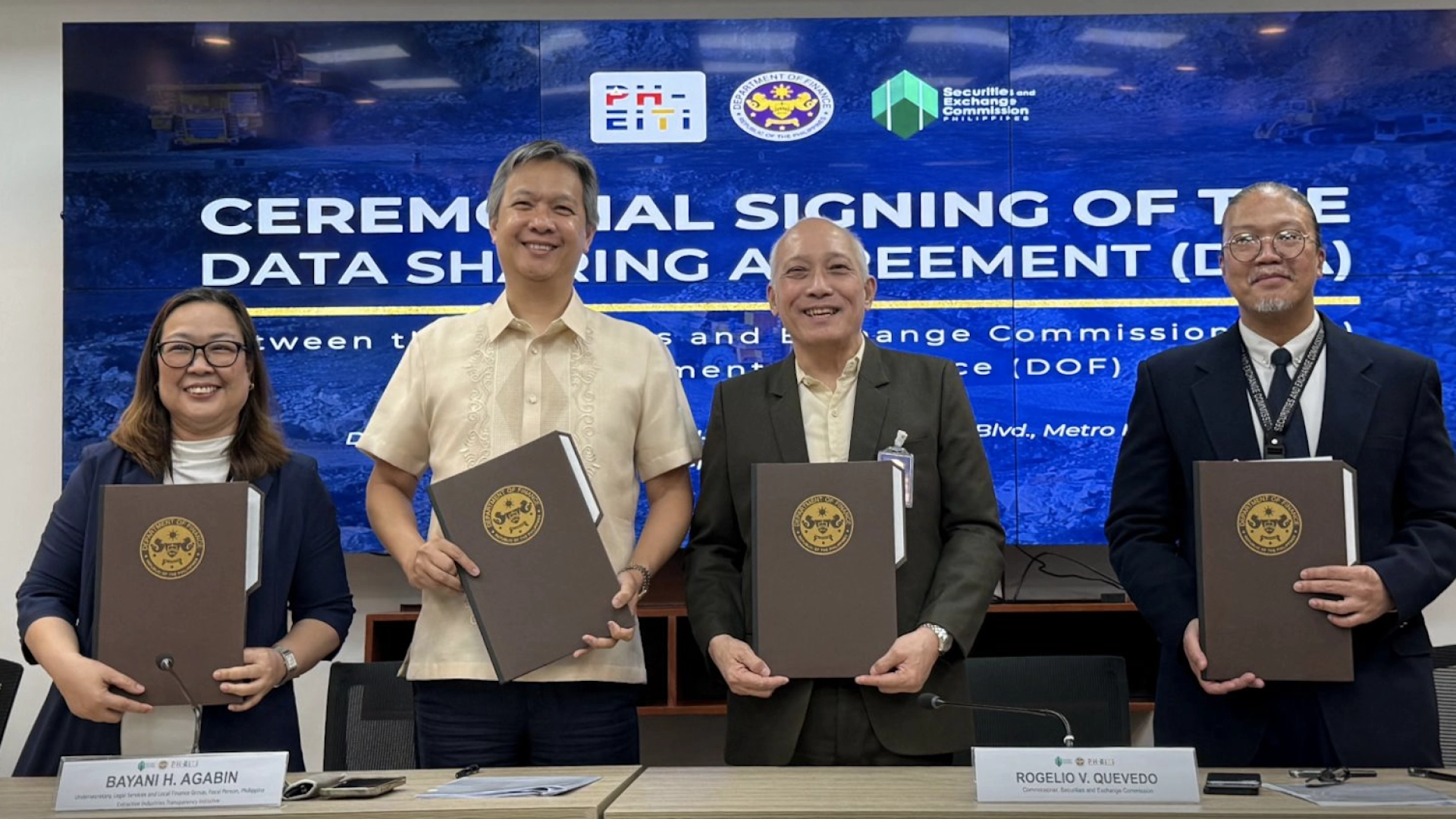
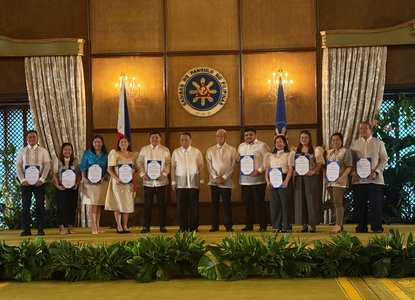
Ceremonial signing of the data sharing agreement to enhance access to beneficial ownership information in the Philippines.
3. Strengthening investor confidence
The Philippines’ removal from the FATF grey list in February 2025 reflected wide-ranging government and regulatory reforms. While this outcome resulted from cumulative effort across multiple institutions, initiatives supported by OE contributed to a stronger enabling environment for “improving access to accurate beneficial ownership information for law enforcement agencies”, as noted by the Anti-Money Laundering Council (AMLC).
Improved availability and use of beneficial ownership data has strengthened the tools available to regulators, civil society and communities to identify conflicts of interest, monitor corporate compliance and advocate for more equitable benefit-sharing. For investors, these reforms support confidence in governance frameworks and responsible investment. For communities, they offer clearer pathways to seek redress when companies fail to meet social or environmental obligations.
“From an industry perspective, this agreement brings three big advantages: it sets clear expectations for what we disclose; it ensures that all companies play by the same rules; and it opens the door for data driven improvements in the way we operate.” – Atty. Ronald Rex S. Recidoro, Executive Director of the Chamber of Mines of the Philippines
4. Building awareness and capacity to use data
OE facilitated training for policymakers, civil society organisations and journalists to strengthen technical literacy and the use of beneficial ownership data:
- Sessions with the Senate Economic Planning Office highlighted how ownership transparency supports fiscal oversight and governance reform.
- In partnership with the Department of Finance, OE helped integrate beneficial ownership commitments into the Philippines’ Open Government Partnership (OGP) national plan.
- The programme engaged extractive companies, demonstrating how beneficial ownership disclosure supports due diligence and aligns with evolving global expectations on corporate governance.
- In collaboration with the civil society organisation Banty Kita, OE engaged stakeholders from communities affected by mining to demonstrate how beneficial ownership data can be used to monitor corruption risks and inform accountability efforts.
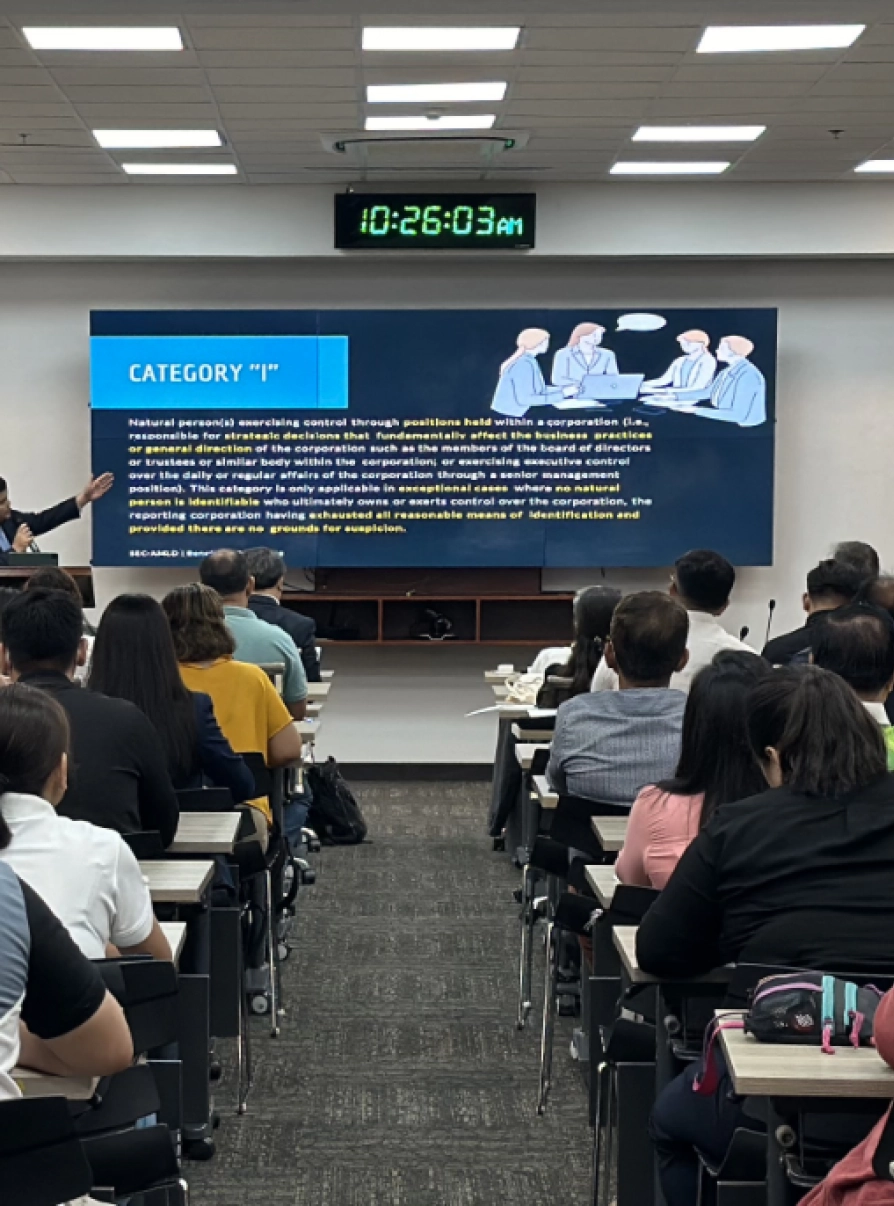
Atty. Daniel Macalino, Assistant Director, Securities Exchange Commission Philippines responds to civil society queries on the key provisions of the Securities Exchange Commission and Philippines EITI Data Sharing Agreement.
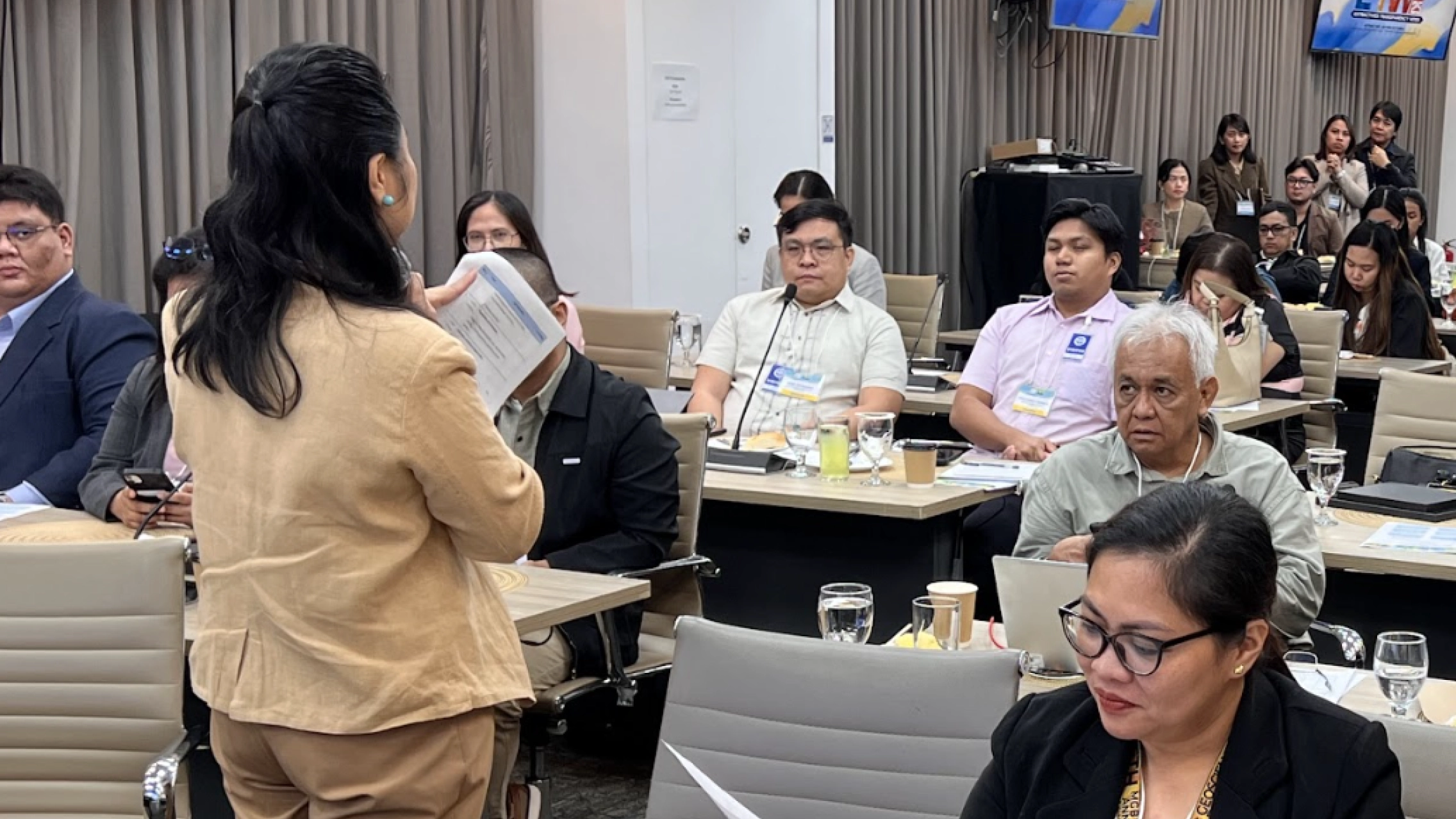
Participants listen in on the importance of inter-agency coordination at the Transparency Week in the Philippines.
The Opening Extractives team facilitating data use trainings in the Philippines in November 2022.
Conclusion
Opening Extractives has supported critical steps towards more transparent and accountable extractive governance in the Philippines. Legislative reform, improved data sharing and growing public awareness have laid the groundwork for sustained beneficial ownership disclosure.
While current mechanisms focus on large-scale mining, lessons from OE are informing wider reform efforts across sectors, including artisanal mining and oil and gas. The next phase is to deepen use of the data – strengthening licensing integrity and tax compliance, supporting due diligence by companies, and enabling communities to hold decision-makers and operators to account.
“Beneficial ownership transparency is not just a compliance exercise, but a tool for strengthening governance and accountability in the extractives sector. The Opening Extractives programme has helped encourage greater use of data and supported stakeholders in understanding how beneficial ownership information can inform decision-making and reduce governance risks.” – Karol Ilagan, Journalist and Journalism Educator, University of Philippines
Funding
The Opening Extractives programme is made possible with the generous support of the BHP Foundation.
This impact story includes contributions from Louise Russell-Prywata (Deputy Executive Director, Open Ownership), Emily Manuel (Senior Regional Manager, Open Ownership), Isabelle Kermeen (Communications Manager, Open Ownership), Sarah Hayton (Country Manager, EITI), Alice Perepyolkina (Communications Officer, EITI) and Leila Pilliard (Communications Manager, EITI).